
Vacuum Motors: Working Principle, Types, Applications & Selection Guide
Introduction
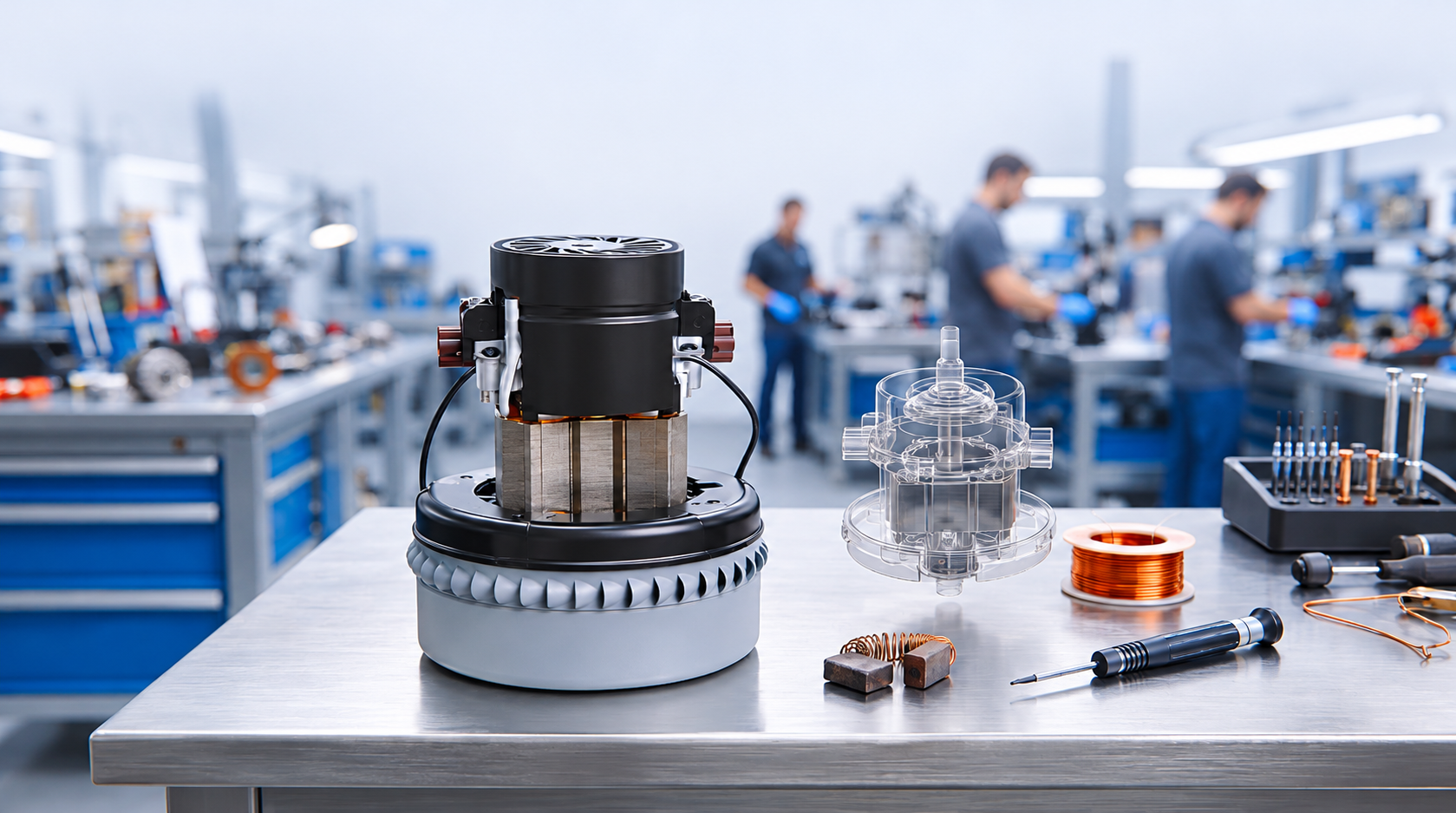
Vacuum motors are important components in industrial cleaning equipment, dust extraction systems, packaging machines, and various manufacturing applications. They generate the airflow and suction required to collect dust, remove unwanted particles, and support material-handling operations.
Choosing the right vacuum motor is essential for maintaining equipment performance, reducing downtime, and ensuring smooth machine operation.
In this blog, we will understand how vacuum motors work, their types, industrial applications, and the important factors to consider before selecting one.
What Is a Vacuum Motor?
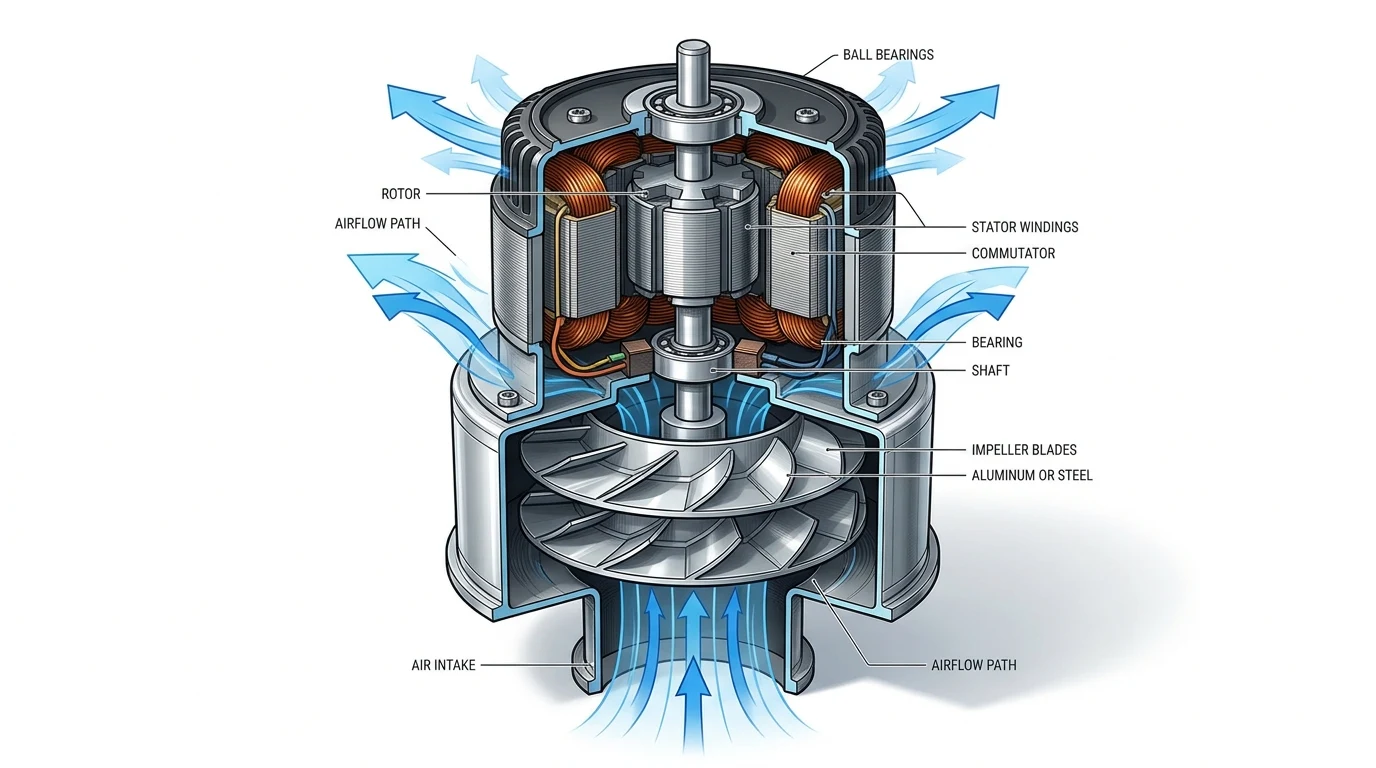
A vacuum motor is an electric motor designed to drive a fan or impeller that generates airflow and suction within a vacuum system.
These motors are commonly used in industrial vacuum cleaners, dust collection equipment, suction machines, and specialised cleaning systems.
It is important to distinguish between a vacuum motor and a vacuum pump. A vacuum motor provides the mechanical drive, while a vacuum pump is designed to create a vacuum by removing gas or air from a closed system.
How Does a Vacuum Motor Work?
A vacuum motor converts electrical energy into mechanical energy to rotate an internal fan or impeller.
Its basic working process involves:
- Power Supply: Electrical power is supplied according to the motor's rated voltage and frequency.
- Motor Rotation: The motor rotates the connected fan or impeller.
- Air Movement: The rotating impeller moves air through the equipment.
- Suction Generation: A pressure difference is created, drawing air and suitable particles through the inlet.
The actual suction and airflow depend on the motor design, impeller arrangement, filtration system, and operating conditions.
Types of Vacuum Motors
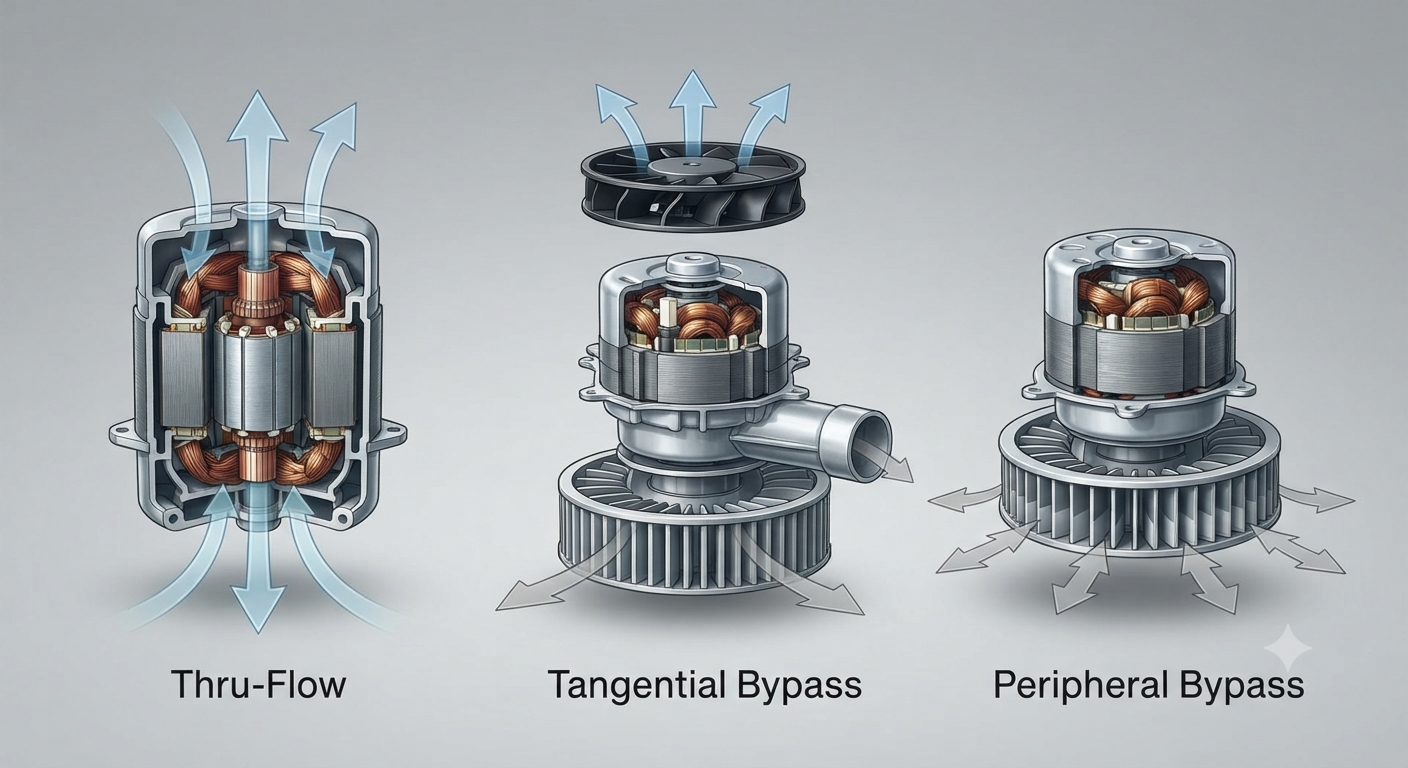
Vacuum motors are available in different designs according to the suction and airflow requirements of the application.
1. Single-Stage Vacuum Motors
These motors use a single impeller stage and are generally suitable for applications requiring moderate suction.
Applications include commercial vacuum cleaners, small industrial cleaning machines, and general-purpose suction equipment.
2. Two-Stage Vacuum Motors
These motors use two impeller stages to achieve a higher pressure difference in suitable equipment designs.
Applications include industrial vacuum cleaners and manufacturing cleaning systems.
3. Three-Stage Vacuum Motors
Three-stage designs use multiple impeller stages to provide higher vacuum performance in suitable applications.
They are commonly considered for heavy-duty industrial vacuum equipment and specialised suction systems.
The number of stages alone does not determine performance. Always check the manufacturer's airflow, vacuum pressure, and power specifications.
Industrial Applications of Vacuum Motors
Vacuum motors support several industrial operations where controlled airflow and suction are required.
- Manufacturing: Used in industrial cleaning equipment to remove dust, metal particles, and production waste.
- Packaging: Supports suction-based material handling and positioning.
- Pharmaceuticals: Used in suitable cleaning and material-handling equipment.
- Food Processing: Supports cleaning and handling processes with application-appropriate equipment.
- Automotive: Used in industrial cleaning systems and specialised production equipment.
- Dust Collection: Helps collect dust and particles through properly designed filtration systems.
Factors to Consider Before Selecting a Vacuum Motor
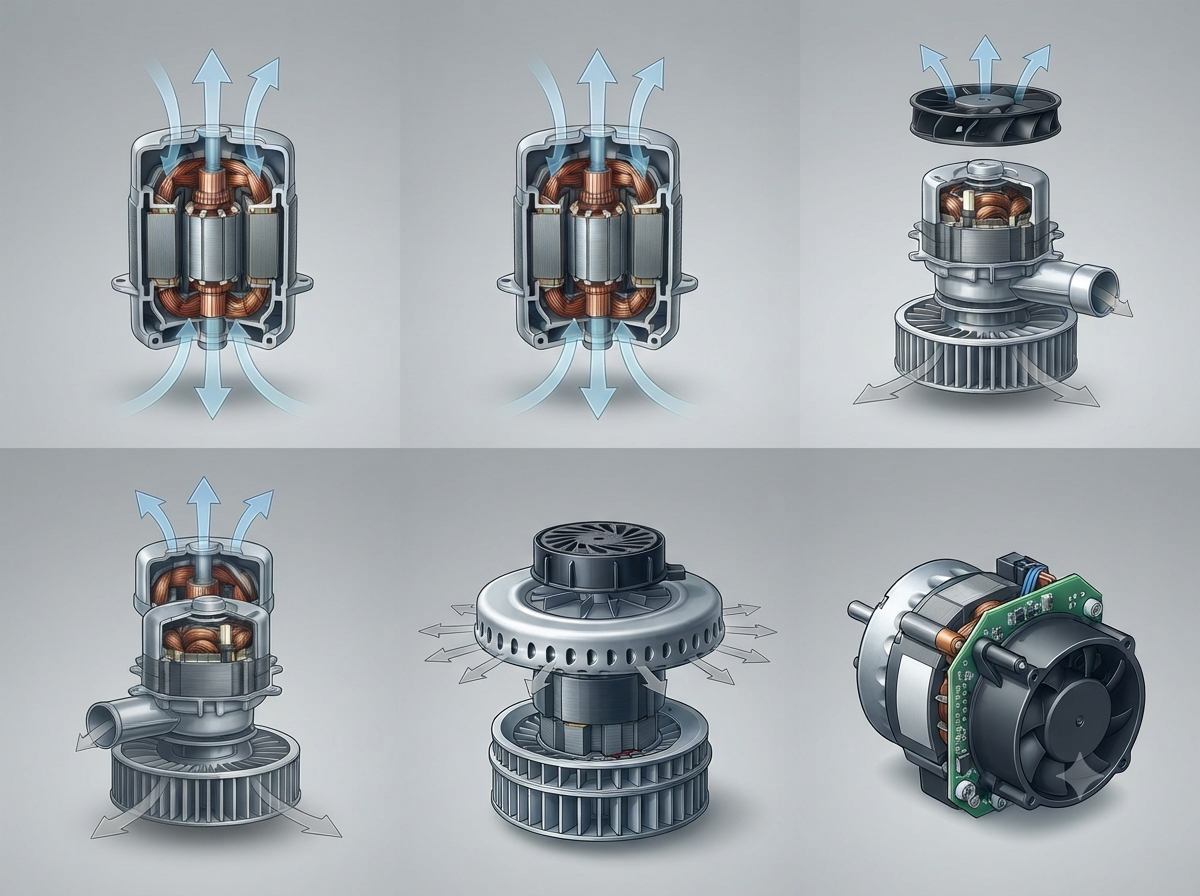
Selecting a vacuum motor only by its power rating may lead to performance problems. Check these specifications before purchasing:
- Rated Power: Confirm the required wattage or kilowatt rating.
- Voltage and Frequency: Check the available electrical supply and phase requirements.
- Airflow Capacity: Verify the required airflow in CFM or m³/h.
- Vacuum Pressure: Check the required suction pressure against the manufacturer's specifications.
- Motor Speed: Ensure the operating speed matches the equipment.
- Duty Cycle: Confirm whether the motor is suitable for intermittent or continuous operation.
- Mounting Dimensions: Check the physical size, shaft, and mounting arrangement.
- Operating Environment: Consider dust, moisture, temperature, and cooling requirements.
For replacement applications, comparing the existing motor nameplate and manufacturer's datasheet is especially important.
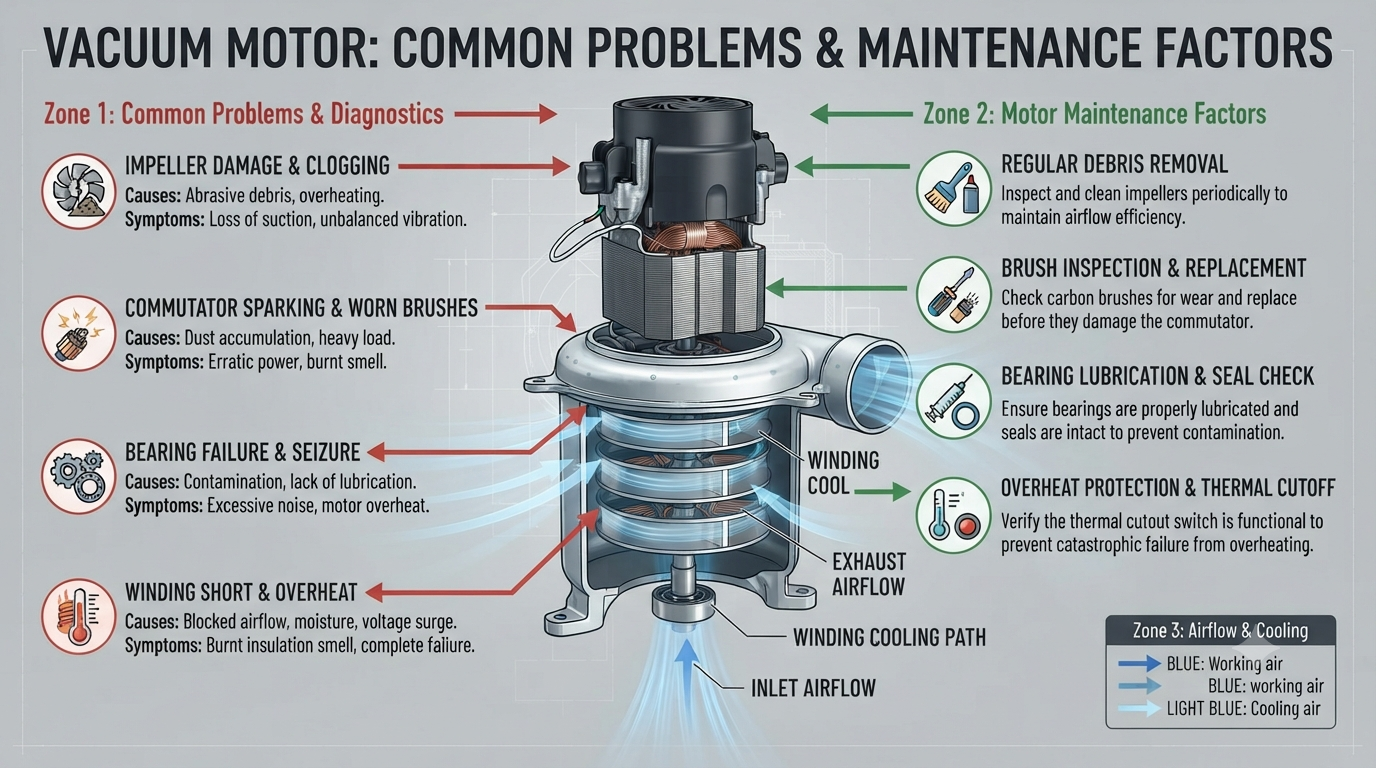
Common Vacuum Motor Problems and Maintenance
Regular maintenance helps maintain performance and reduce unexpected breakdowns.
Some common problems include:
- Reduced suction: May result from blocked filters, air leakage, or damaged impellers.
- Overheating: Can occur due to restricted airflow, excessive load, or cooling problems.
- Unusual noise: May indicate worn bearings, loose mounting, or impeller imbalance.
- Unexpected shutdown: Could be related to electrical supply issues or overload protection.
To maintain reliable operation, clean filters regularly, inspect ventilation passages, check electrical connections, and follow the manufacturer's maintenance recommendations.
Why Choose Techno Park Inc.?
Choosing the correct motor requires checking the complete application, electrical specifications, mounting dimensions, and operating conditions.
Techno Park Inc. supports industrial customers with electrical and automation product sourcing, along with engineering services for machine and automation requirements.
Our services include:
- Industrial motor and electrical component sourcing
- Automation panel design and development
- Machine design and development
- PLC and HMI programming
- On-site and remote technical support
- Obsolete product sourcing
Through TPIPro+, customers can also explore industrial motors and other automation products.
Explore the TPIPro+ Motors Category.
Looking for the Right Vacuum Motor?
Whether you need a motor for a new machine or a replacement for existing equipment, correct specification matching is essential.
Keep the motor nameplate details, model number, power rating, voltage, speed, and mounting dimensions ready when requesting a quotation.
Connect with Techno Park Inc. for industrial motor sourcing and automation requirements.
Visit: Techno-Park Inc.
Explore Products: TPIPro+
Need Custom Engineering for Your Facility?
Whether you are looking to retrofit legacy control cabinets, design high-precision heating systems, or source critical automation components, our engineering team is ready to help.